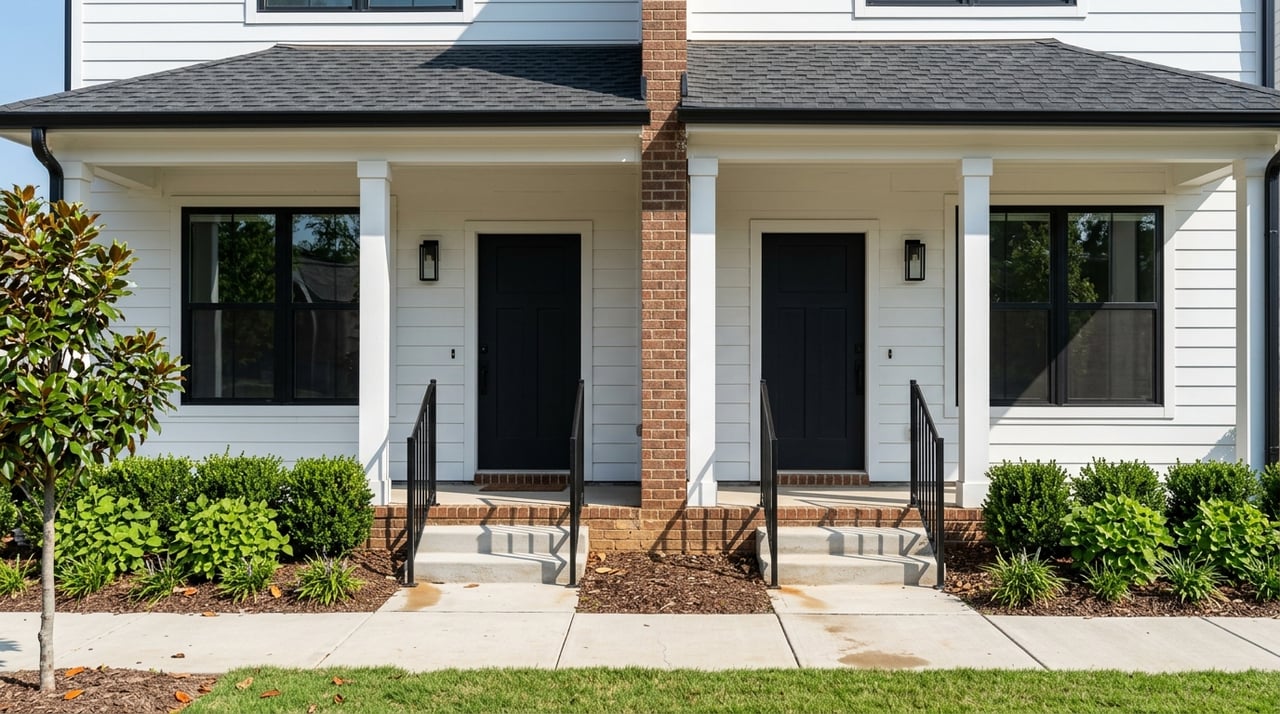
Trying to choose between a townhome and a single-family home in Gwinnett County? You are not alone. In a large, growing county where housing demand does not fully match supply, this decision often comes down to balancing your budget, lifestyle, and long-term plans. The good news is that once you know what to compare, the right fit becomes much clearer. Let’s dive in.
Why this choice matters in Gwinnett
Gwinnett County is big, active, and still growing. The county’s population is estimated at more than 1 million, and the U.S. Census QuickFacts for Gwinnett County shows 351,137 housing units in 2024, with a 66.3% owner-occupied rate.
The local housing mix also helps explain why buyers face this decision so often. Gwinnett’s 2025 Consolidated Plan says 71.6% of housing units are 1-unit detached and 6.4% are 1-unit attached, a category that includes townhomes and rowhouses. In plain terms, detached homes have open space on all four sides, while attached homes share walls.
That distinction matters because housing supply has not kept pace with demand. According to Gwinnett County’s 2025-2029 Consolidated Plan draft, average annual housing production from 2010 to 2020 was about 3,620 units per year, less than half the pace of prior decades. For you as a buyer, that can make the townhome-versus-single-family decision less about preference alone and more about what gives you the best value in your target area.
How prices compare
Townhomes in Gwinnett are not just an entry-level option anymore. The county’s Comprehensive Housing Study found that from 2015 to 2021, the average price of a new detached home rose from $285,000 to more than $396,000. Over the same period, the average price of a new townhome rose from nearly $199,000 to more than $320,000.
That price gap still matters, but it is narrower than many buyers expect. As land costs rise, the same housing study notes that townhomes have become a more competitive substitute for detached homes. If you are trying to keep your monthly payment in check, a townhome may offer a more accessible path into some Gwinnett submarkets.
The countywide numbers also provide helpful context. The Census reports a median owner-occupied home value in Gwinnett County of $380,900 for 2020 through 2024, along with median monthly owner costs with a mortgage of $2,050. That does not mean every townhome will be cheaper than every detached home, but it does show why many buyers compare both property types side by side.
Where townhomes often make sense
Townhomes can be a smart option if you want to stretch your buying power without leaving Gwinnett. In many cases, you may be able to buy in a location that would be harder to reach with a detached-home budget. That can be especially important in a county where pricing varies widely by city and corridor.
Gwinnett’s planning framework also points to where townhomes tend to fit best. The county’s Livable Centers Initiative page highlights town centers, activity centers, and corridors such as Buford, Duluth, Lawrenceville, Norcross, Peachtree Corners, Snellville, Sugar Hill, Suwanee, and several major roadway areas. If you want easier access to shops, services, and daily errands, attached housing is often part of that development pattern.
Historical development activity supports that trend too. Gwinnett’s 2016 Development Activity Report shows townhomes were permitted in all seven county planning areas, with especially heavy activity in Snellville/Grayson and notable activity in Lawrenceville/Central, Duluth/Suwanee, Norcross/Peachtree Corners, Dacula/East, and Buford/Sugar Hill. In other words, townhomes are spread across the county, not limited to one small pocket.
Where single-family homes often win
A detached home may be the better fit if you want more separation from neighbors and more control over the exterior. Because detached homes have space on all sides, they often appeal to buyers who prioritize yard space, storage, parking flexibility, or a more traditional subdivision setting.
Single-family homes can also feel more straightforward if you prefer to manage your own property decisions. While every home comes with upkeep, detached owners often have more direct control over maintenance timing, exterior changes, and repair decisions, subject to any neighborhood rules that may still apply.
That said, more control usually means more responsibility. Lawn care, roof planning, exterior repairs, and general upkeep often fall more fully on you. If you like the idea of autonomy and are comfortable budgeting for maintenance, that tradeoff may be worth it.
Understand the HOA tradeoffs
For many buyers, the biggest difference is not the shared wall. It is the homeowners association.
Gwinnett County explains on its Homeowners Associations information page that HOAs are private organizations that can enforce covenants, property maintenance rules, and aesthetic standards. The county also notes that local governments do not enforce association covenants, which means you need to review the community’s rules carefully before you buy.
HOA dues can provide real value, depending on the community. As summarized in the research above, Freddie Mac notes that HOA fees may cover items like trash removal, water and sewage, lawn care for common areas, pest control, and maintenance of shared spaces. HUD also notes that special assessments may be used for large projects such as roof replacement.
For you, the takeaway is simple: a lower-maintenance lifestyle is never truly maintenance-free. Before buying a townhome, ask for the HOA documents, budget, reserve information, and any history of special assessments. A well-run HOA can make ownership easier, while a poorly funded one can create surprises.
Think about privacy and daily living
Structure affects day-to-day experience. Census definitions describe attached homes as structures with ground-to-roof dividing walls, which usually means less exterior autonomy and more shared responsibility than a detached home. Still, the exact living experience depends on the specific community and its governing documents.
When comparing homes, think beyond square footage. Ask yourself how much yard you want, how important quiet separation is to you, and whether you need extra storage or parking. A townhome may check many boxes on convenience, while a detached home may better fit your priorities for privacy and flexibility.
Here are a few practical questions to ask yourself:
- How much exterior maintenance do you want to handle yourself?
- How comfortable are you with HOA dues and the possibility of special assessments?
- How important are yard size, privacy, and noise separation?
- Do you want to live closer to a town center or corridor where townhomes are common?
- How much monthly payment flexibility do you need?
- How long do you expect to stay in the home before selling?
Location matters more than county averages
One of the biggest mistakes buyers make is comparing property types without narrowing the location first. In Gwinnett, pricing can vary dramatically from one city or corridor to another. That means a townhome in one area may cost as much as a detached home somewhere else.
This is why your search should start with your actual lifestyle and commute needs. If you want to be near an activity center or in a more connected, lower-maintenance setting, a townhome may line up well. If you want more space and a more spread-out neighborhood pattern, a detached home may be the stronger match.
Gwinnett’s planning vision also supports this divide. The county’s livable centers and Park Place planning framework focus on places where daily needs, retail, entertainment, and open space can be reached within a short trip. Buyers who value that kind of accessibility often find attached housing more often in those areas.
A simple way to decide
If you are still torn, use this quick framework:
Choose a townhome if...
- You want a lower-maintenance ownership style
- You are comfortable reviewing and following HOA rules
- You want to maximize location for your budget
- You prefer being near town centers, corridors, or daily conveniences
- You are willing to trade some privacy and exterior control for convenience
Choose a single-family home if...
- You want more yard space and separation from neighbors
- You prefer greater control over exterior decisions
- You need more parking, storage, or outdoor flexibility
- You are prepared for more hands-on maintenance
- You value privacy more than shared-community convenience
The right answer depends on your goals
There is no one-size-fits-all winner in Gwinnett County. A townhome can be the smart move if you want convenience, location, and a potentially lower entry point in certain submarkets. A single-family home can be the better move if you want space, privacy, and more control over how you live and maintain the property.
The best choice comes from matching the home type to your budget, your monthly comfort level, and the way you want to live day to day. If you want help comparing options across Gwinnett County, Realtor Josh Parker can help you weigh the tradeoffs and find the right fit for your goals.
FAQs
What is the difference between a townhome and a single-family home in Gwinnett County?
- A townhome is typically an attached home that shares at least one wall with another unit, while a single-family home is detached with open space on all four sides.
Are townhomes cheaper than single-family homes in Gwinnett County?
- Often, but not always. Gwinnett County research shows townhomes have generally had lower average new-home prices than detached homes, though the gap has narrowed over time.
Do Gwinnett County townhomes usually have HOA fees?
- Many do, and those fees may cover certain shared services or maintenance, but you should always review each community’s HOA documents, budget, and reserve funding before buying.
Are townhomes common across Gwinnett County?
- Yes. County development data show townhomes have been permitted across all seven planning areas, including places like Lawrenceville, Duluth, Suwanee, Norcross, Peachtree Corners, Snellville, and Buford-area markets.
Is a single-family home better for privacy in Gwinnett County?
- It often is, because detached homes do not share walls and usually provide more exterior separation, but the exact feel depends on the lot, layout, and neighborhood setup.
How should I choose between a townhome and a single-family home in Gwinnett County?
- Focus on your budget, comfort with HOA rules and fees, desired maintenance level, need for privacy or yard space, and the location that best fits your daily routine.