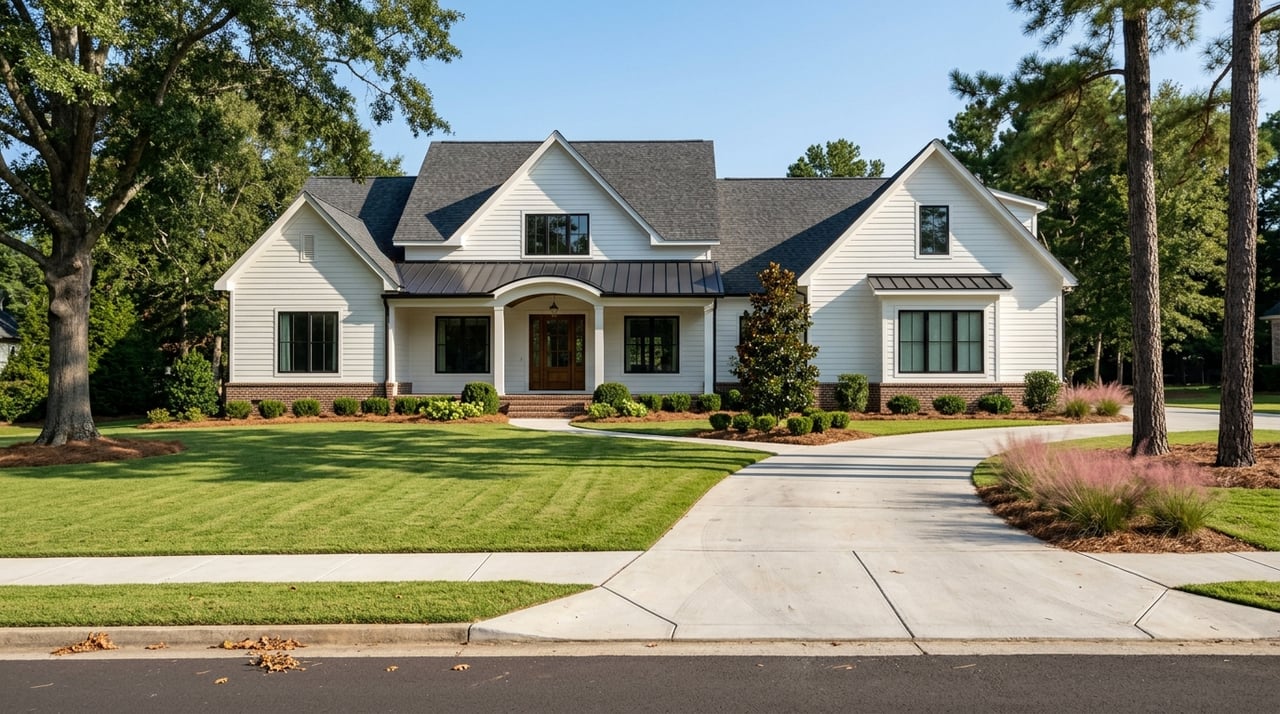
If you are trying to choose between in-town and rural living in Newton County, you are not alone. Many buyers want more space without giving up convenience, while others want easy access to errands, dining, and daily routines without feeling too crowded. The good news is that Newton County offers both, from Covington’s more developed areas to the county’s larger-acreage rural sections. This guide will help you compare the lifestyle, lot sizes, utilities, and day-to-day tradeoffs so you can decide what fits you best. Let’s dive in.
Newton County offers two distinct lifestyles
Newton County covers 279 square miles east of Atlanta along I-20. Covington is the county seat, and the county also includes Porterdale, Mansfield, Newborn, Oxford, and part of Social Circle.
County planning materials describe Newton County as a place with both rural areas and town centers. The county’s long-term vision is to preserve its rural setting and charm while directing more growth toward I-20 corridor nodes and major intersections. In practical terms, that creates a meaningful choice for buyers deciding between a more in-town lifestyle and a more private rural setting.
What in-town living usually means
In Newton County, in-town living is best understood as Covington and the more developed corridors around it. This is where you are more likely to find a neighborhood feel, smaller lots, and closer access to shops, services, and restaurants.
Downtown Covington is the county’s clearest amenity hub. The city highlights the Square, shopping centers, restaurants, boutiques, parks, health and beauty services, and a hospitality district centered on business, entertainment, and nightlife.
If you picture being able to run errands with less planning, meet friends for dinner nearby, or enjoy a more centralized daily routine, in-town living may feel like a better fit. You still need a car in most cases, but your regular stops are often closer together.
What rural living usually means
Rural living in Newton County usually points to the agricultural and rural-estate areas in the unincorporated county. These areas are shaped by larger tracts, lower-density development, and more separation between homes.
County zoning helps show that difference clearly. In the Unified Development Ordinance, the A Agricultural district has a 10-acre minimum lot area, while the RE Rural Estate district has a 2-acre minimum. The AR Agricultural Residential district also supports lower-density living, with minimum lot sizes ranging from 43,560 to 60,000 square feet depending on utility service.
If you are looking for more land, more privacy, or a property with a country setting, the rural side of Newton County may check more of your boxes. The tradeoff is that daily errands and services often require more driving and more planning.
Lot size is one of the biggest differences
For many buyers, the first major question is simple: how much land do you want? In Newton County, zoning standards suggest a clear shift from larger rural acreage to smaller, more infrastructure-dependent lots closer to town.
Here is a simple way to compare the typical pattern:
| Lifestyle | Typical land pattern | What it often feels like |
|---|---|---|
| In-town | Smaller lots, closer spacing | More neighborhood-centered, easier access to services |
| Rural | Larger lots or acreage, wider spacing | More private, more land-focused, quieter day-to-day setting |
Closer-in residential districts like R1 and R2 are still low- to medium-density, but they are more closely tied to existing or adequate public facilities. R1 minimum lot sizes range from 35,500 to 51,000 square feet, and R2 minimums range from 35,000 to 40,000 square feet, according to the county ordinance.
That means your decision is not just about the house itself. It is also about whether you want room to spread out or a setting that keeps you closer to everyday conveniences.
Utilities can affect your day-to-day life
Another major difference between in-town and rural living in Newton County is how a home is served. Based on the county’s zoning framework, rural properties are more likely to rely on wells and septic systems, while more in-town properties are generally more dependent on public water and sewer.
That distinction matters when you are comparing homes. Utility type can shape maintenance expectations, lot use, and even how you think about future improvements to the property.
If you are considering a rural home, it is smart to ask detailed questions about the well, septic system, and site conditions. If you are leaning in-town, you may place more value on homes connected to public utilities and the convenience that can bring.
Errands and dining are easier closer to Covington
Convenience is where in-town living often stands out most clearly. Downtown Covington offers a concentrated mix of shopping, dining, parks, boutiques, and service businesses, making it one of the easiest places in the county for regular errands and outings.
County planning documents also note that residents have wanted more goods and services available locally rather than driving to other counties. That helps explain an important real-world difference: if you live in a more rural part of Newton County, you will usually need to plan more time for grocery runs, dining out, and basic errands.
That does not make rural living less desirable. It simply means convenience works differently. Some buyers are happy to trade shorter errand trips for more land and privacy, while others prefer having more daily needs closer at hand.
Commute patterns matter in both settings
Many buyers assume in-town living automatically means a short commute, but Newton County as a whole has a commuter rhythm. According to the U.S. Census QuickFacts for Newton County, the mean travel time to work is 35.9 minutes countywide, and 36.5 minutes in Covington.
The county’s comprehensive plan says Newton County benefits from three I-20 interchanges, a strong road system, and relatively little congestion compared with Conyers and Atlanta. At the same time, the county notes limited transit options, including a lack of fixed-route bus service.
For you, that means driving is a key part of daily life whether you choose in-town or rural living. The difference is often whether your routine starts closer to restaurants, shops, and major corridors, or farther out on larger parcels with more space around you.
Pace of life feels different
The biggest choice may come down to how you want everyday life to feel. Newton County’s official descriptions highlight rural character, natural beauty, rivers, lakes, Factory Shoals Park, and the Cricket Frog Trail. Downtown Covington, by contrast, is presented as a compact area built around the Square, local businesses, and community activity.
If you enjoy a private-country setting, rural living may feel more relaxing and more aligned with your goals. If you like being closer to dining, events, and a town-center atmosphere, in-town living may feel more practical and connected.
Neither option is better across the board. The right choice depends on what you want your normal Tuesday to look like, not just your weekend plans.
Questions to ask before you choose
Before you decide between in-town and rural living in Newton County, it helps to narrow in on a few lifestyle questions:
- Do you want acreage, or do you prefer a smaller lot with less upkeep?
- Are you comfortable with a home that may rely on well and septic systems?
- How often do you want to drive for groceries, dining, or basic errands?
- How important is quick access to Covington or I-20?
- Do you picture a neighborhood-centered routine or a more private setting?
These questions can save you time and help you focus on homes that actually match how you want to live.
A smart approach for buyers in Newton County
The best way to choose is to balance your must-haves with your daily habits. If land, privacy, and breathing room top your list, rural Newton County may offer the lifestyle you want. If convenience, easier errands, and access to downtown Covington matter more, an in-town location may be the better move.
A local agent can help you compare not just homes, but the practical differences between areas, lot types, and utility setups. That is especially helpful in a county like Newton, where the gap between an in-town property and a rural one can shape your routine in a big way.
If you are weighing your options in Newton County, Realtor Josh Parker can help you compare homes, land, and lifestyle tradeoffs so you can move forward with confidence.
FAQs
What does in-town living mean in Newton County?
- In-town living usually refers to Covington and the more developed corridors around it, where homes are generally closer to shopping, dining, and everyday services.
What does rural living mean in Newton County?
- Rural living usually refers to agricultural and rural-estate areas in the unincorporated county, where properties often have more land, more privacy, and more distance between homes.
How large are rural lots in Newton County?
- County zoning shows that rural lot sizes can be quite large, including a 10-acre minimum in Agricultural districts and a 2-acre minimum in Rural Estate districts.
Are utilities different between in-town and rural homes in Newton County?
- Yes. Based on county zoning patterns, rural homes are more likely to rely on wells and septic systems, while in-town homes are more commonly tied to public water and sewer.
Is Covington the main hub for shopping and dining in Newton County?
- Yes. The City of Covington identifies downtown as a major center for restaurants, shopping, boutiques, parks, and service businesses.
What is the average commute in Newton County?
- According to U.S. Census QuickFacts, the mean travel time to work is 35.9 minutes in Newton County and 36.5 minutes in Covington.
How do I choose between in-town and rural living in Newton County?
- Start with your daily priorities, including lot size, privacy, utility preferences, commute patterns, and how close you want to be to errands and dining.